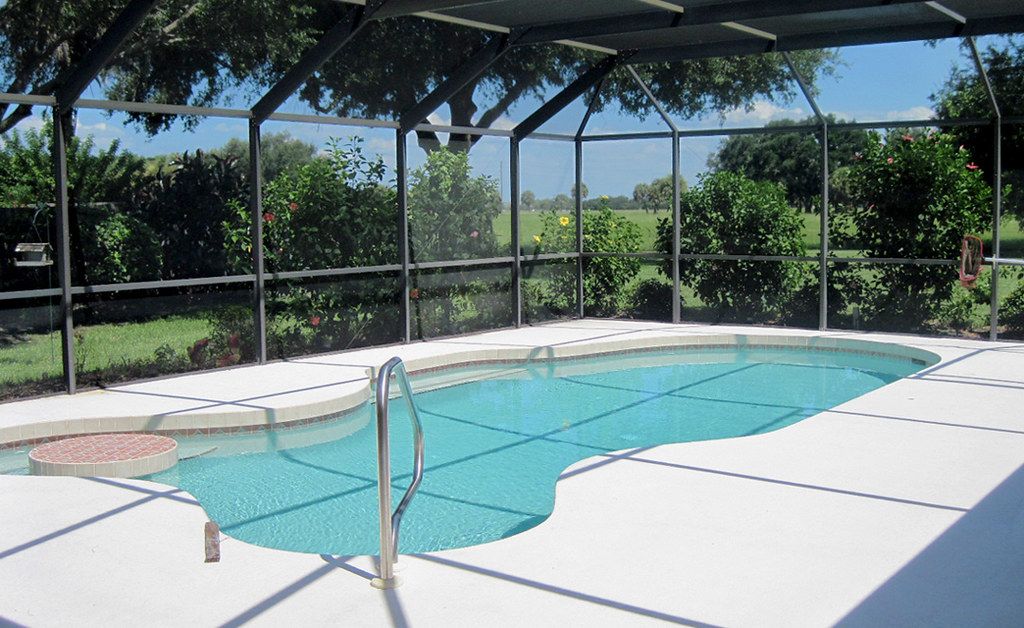
The pool is the reason most groups choose a villa, and it is the first thing to sort out when you arrive. Before the bags are unpacked and before anyone changes into swimwear, walk the whole pool area together as adults and look at it the way a curious two-year-old would.
Walk the barriers on day one
Most villas in this part of Florida have a screened enclosure around the pool and deck, sometimes with a fence or wall as well. The screen keeps out leaves, lizards and most insects. It is not, by itself, a child barrier. Small children push through torn panels, and the screen door to the yard is often left unlatched.
Check every door that opens from the house onto the pool deck. Many houses have sliding glass doors from the living room and from one or two bedrooms. Find out which doors have alarms, whether those alarms work, and how they are switched on and off. A door alarm that someone silenced on arrival day protects nobody for the rest of the week.
- Test every door and gate alarm, then leave them all on.
- Check that self-closing gates actually swing shut and latch on their own.
- Look for gaps under the screen, loose panels and furniture a child could climb.
- Find the pool cover or removable fence if the house has one, and learn how it works.
- Write the house address by the phone, ready for an emergency call.
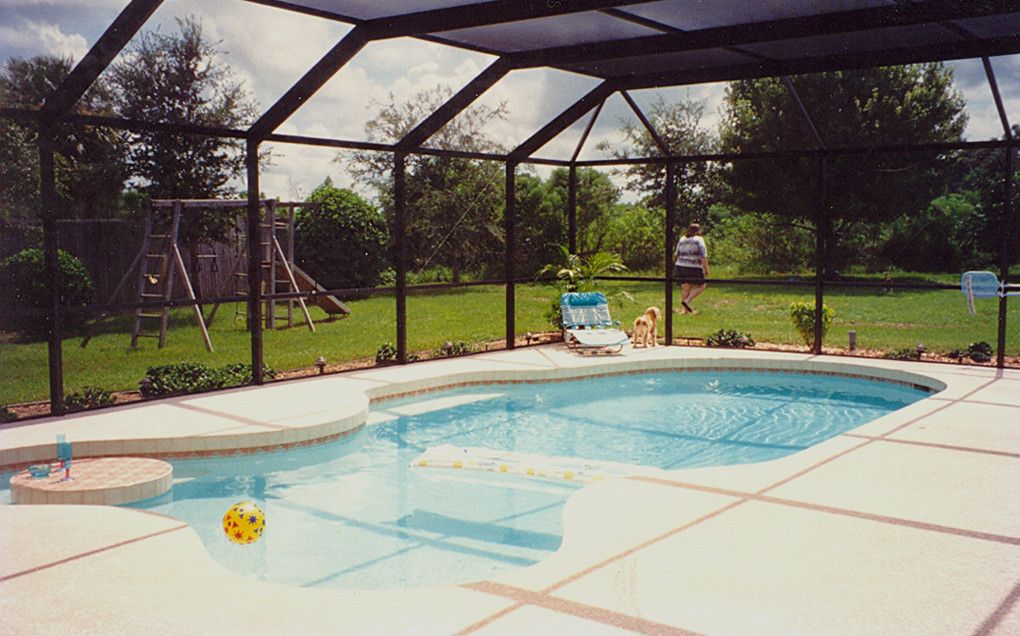
If anything is broken, report it to whoever manages the house straight away, and keep small children well away from that part of the deck until it is fixed.
Name a water watcher
The most useful habit a villa group can adopt is also the simplest. One named adult watches the water, and does nothing else, whenever anyone is in or near the pool. Not the adult reading on a lounger, not the one turning burgers on the grill. One person, eyes on the water, phone face down.
Swap the job every half hour or so, and hand it over out loud, by name, so the next watcher knows the pool is now theirs. With a big group in one house, everyone assumes someone else is looking. A spoken hand-over closes that gap. Some families use a lanyard or a bright wristband that the watcher wears, so it is obvious at a glance who is on duty.
Agree the rule before the trip, not at the poolside. It is much easier to stick to something everyone signed up to at home.
Toddlers, swimmers and grandparents
Small children need an adult within arm's reach in the water, armbands or not. Inflatable rings and pool toys are playthings, not life-saving devices; a properly fitted life jacket is the only flotation that counts. Take toys out of the water when the pool is not in use, because a floating ball is exactly what draws a toddler to the edge.
Older children who swim well at home can still struggle in an unfamiliar pool. Before the first big splash, show them where the deep end starts, where the steps are and how to hold the edge and work their way along it. Set house rules early and keep them short: no running on the deck, no diving unless the pool is deep enough and the house allows it, and no swimming alone.
Grandparents need a different kind of care. Pool decks are slippery when wet, steps can be shallow and uneven, and there is often no handrail where people climb out. Put a non-slip mat by the door, keep the deck clear of wet towels and toys, and make sure someone knows when a grandparent has gone out to the lanai alone in the evening. There is more on sharing the house with three generations in its own guide.
 Another dayThe first grocery run
Sun and heat on the deck
The Florida sun bounces off water and pale paving, and a pool afternoon can burn faster than a day on the beach back home. Use a high-factor, water-resistant sunscreen and reapply it after swimming. Put small children in sun suits and hats, and make the middle of the day a shade or indoor time. The screen cuts a little sun, not much.
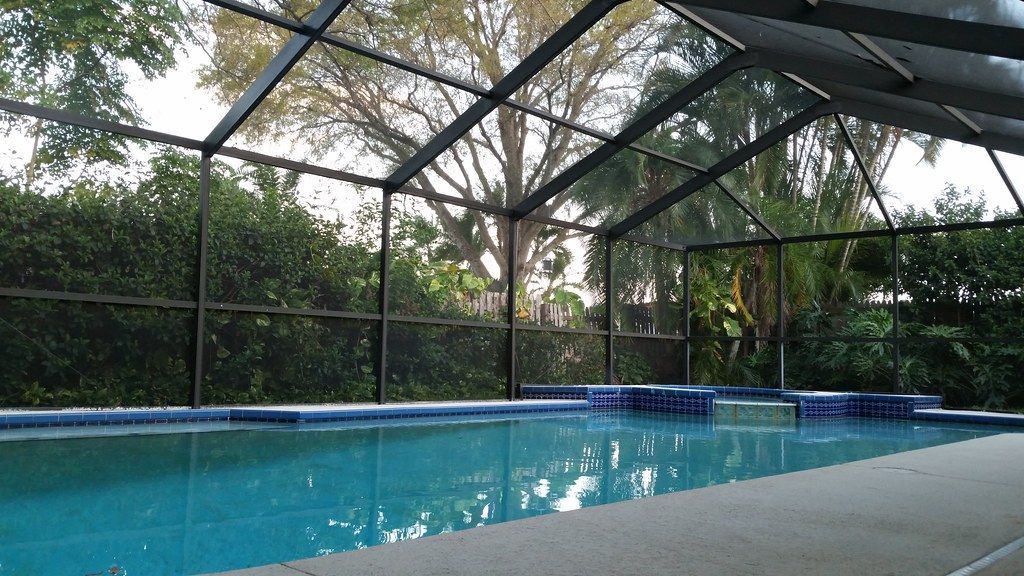
Keep cold water on the deck and make sure everyone drinks it, including the adults who insist they are fine. The paving gets hot enough to hurt bare feet by early afternoon, so pool shoes help, and a quick splash with the hose cools a path to the steps.
Alcohol and pool supervision do not mix. If the adults want a drink by the pool in the evening, the water watcher for that hour stays sober, and the pool closes when it gets dark unless the lights are good and someone is still on duty.
Lightning and the pool
Summer afternoons in Central Florida often bring thunderstorms, and lightning can strike well ahead of the rain. A screened enclosure gives no protection at all. The rule is simple: at the first rumble of thunder, everyone out of the pool and into the house, and nobody back in until well after the last thunder. A common guideline is to wait thirty minutes. There is more on the daily pattern in the guide to storms and heat.
Plan pool time around it. Mornings are often clear, and the hour after a storm has passed, when the air has cooled and the deck has been rinsed, can be the best swim of the day.
Nights, early mornings and quiet moments
The riskiest moments at a villa pool are rarely the busy, noisy ones. They are the quiet ones: an early riser wandering out while everyone sleeps, a child slipping away while the adults are cooking dinner, the evening when everyone is tired after a long day out. Lock the pool doors at night, keep the alarms on, and count heads whenever the group moves from the pool into the house.
Wildlife sometimes finds its way onto the deck too. Frogs, lizards and the odd snake turn up by the pool, and a pond or lake behind the house may hold alligators. Teach children never to go beyond the screen to the water's edge. The guide to who else lives at the villa covers what you may meet.
Before you leave home
A little preparation makes the week easier. Swimming lessons in the months before the trip build confidence, and a water-safety refresher helps more than any gadget. Pack well-fitted life jackets for the smallest children if you can, because borrowed ones rarely fit properly. Adults who will take water-watching turns benefit from basic first aid and CPR training, which many community groups teach in a single session.
Above all, agree the rules as a group before you travel, so nobody has to play the strict one on the first sunny afternoon.