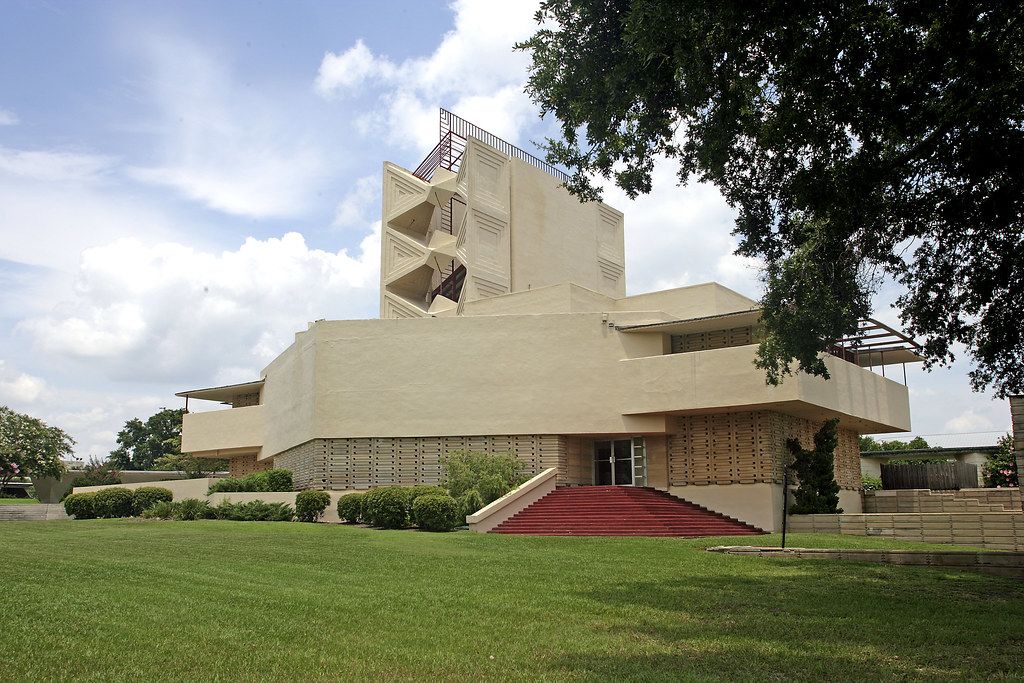
Lakeland sits about 45 minutes west of the villa along I-4, halfway to Tampa, and it is easy to drive past without a second look. That would be a shame. The city holds one of the most remarkable architectural sites in the United States, a college campus designed by Frank Lloyd Wright, and around it a downtown built around small lakes, with swans, shady parks and a fine 1920s promenade. It makes a gentle, flat, varied day out that works for every age.
Florida Southern College and Frank Lloyd Wright
In the late 1930s the president of Florida Southern College invited Frank Lloyd Wright to design a new campus on a hillside above Lake Hollingsworth, on land that was then partly an orange grove. Wright called his plan a "child of the sun", a campus that would grow out of the Florida landscape rather than imitate the old colleges of the north. Building went on for about two decades, much of it done with student labour in the early years, and the result is the largest collection of his buildings on one site.
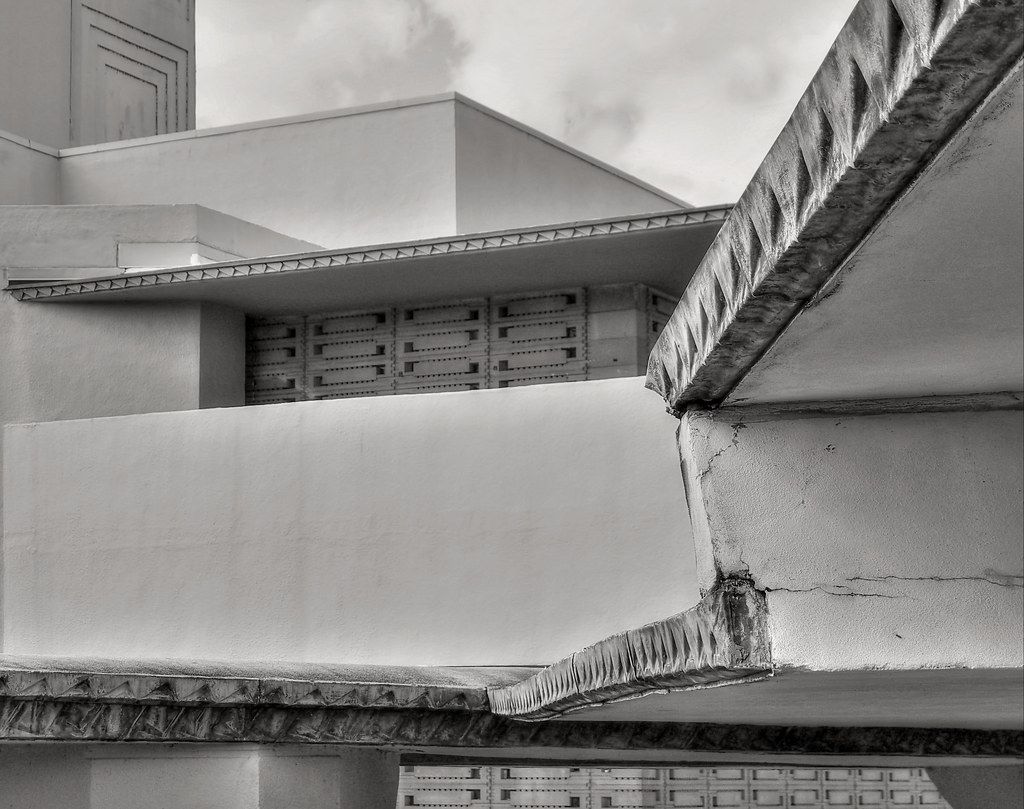
The buildings are low and horizontal, made of light-coloured concrete blocks, many of them set with small pieces of coloured glass that glow when the sun hits them. Wright used local sand in the blocks, so the walls share the colour of the ground they stand on. Overhanging roofs throw deep shadows, and the whole campus is laid out on angles rather than a grid, so every walk turns up a new view.
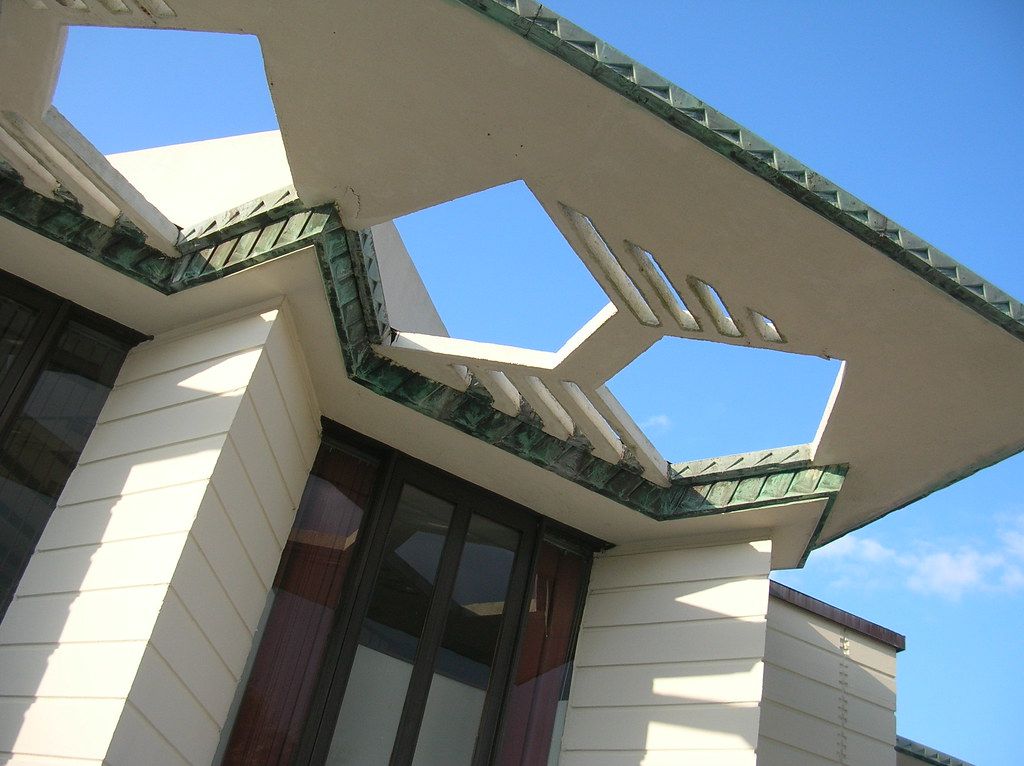
Even if you know nothing about architecture, the campus is easy to enjoy. The scale is human, the paths are flat, and there is always something to look at: a sudden view down a walkway, a band of coloured glass, a roof that seems to float. Children often notice the details first, so give them the job of finding the most unusual window or the lowest roof.
This is a working college, with students and classes, so be respectful in and around the buildings. The college runs a visitor centre and offers guided tours of the Wright buildings; some interiors can only be seen on a tour.
The Esplanades and the chapel
The Esplanades are the thread that ties the campus together: long covered walkways, more than a mile of them in total, that link the buildings and shelter you from sun and rain. Their low roofs are held up by slim columns, and Wright kept them deliberately low, so tall adults sometimes find themselves ducking slightly. Children love following them from building to building.
The Annie Pfeiffer Chapel was the first Wright building on the campus and is still its most striking. A tall, open tower of concrete and steel rises from the centre, sometimes compared to a bow tie or a lantern, and coloured glass set into the blocks scatters light across the interior. Nearby, the smaller Danforth Chapel has its own leaded glass and a quieter, more intimate feel.
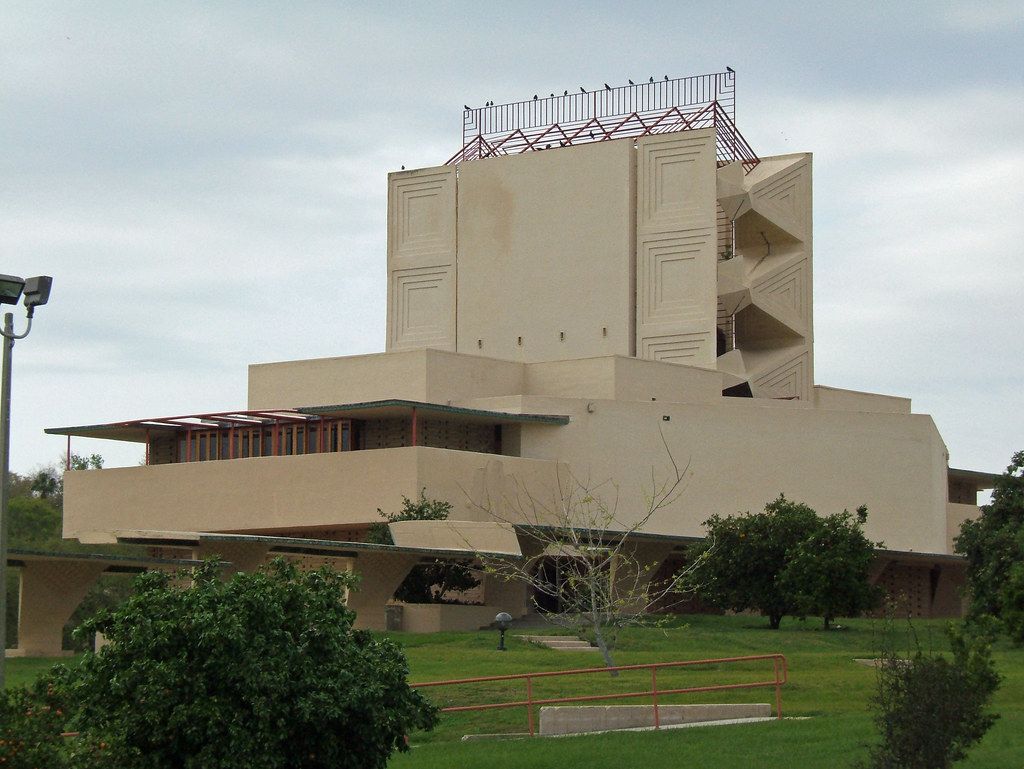
Other buildings worth finding include the science building with its planetarium dome, the administration buildings with their copper-trimmed roofs, and the large pool and fountain area Wright called the water dome. A Usonian-style house, built many years after his death from his drawings, now serves as part of the visitor experience and shows how he imagined affordable family homes.
Wright used local sand in the blocks, so the walls share the colour of the ground they stand on.
 Another dayLake Wales, the old Ridge town
Lake Morton and the swans
A short drive or a longer walk from the campus, Lake Morton is the city's swan lake. Swans have been a symbol of Lakeland for decades, and the city keeps a population of them on its lakes. Around Lake Morton you will usually see swans of several kinds alongside ducks, geese, ibis and other water birds, all used to people and often walking right across the path.
The swans are part of the city's identity, and you will see them on signs, in public art and on souvenirs around town. The birds on the lake are looked after, and in spring you may see cygnets following their parents along the shore.
A paved path loops the lake, flat and easy for buggies and wheelchairs. Benches and shade trees make it a pleasant place for grandparents to sit while children watch the birds. A few practical points:
- Do not feed bread to the birds; rules about feeding can apply, so check the local signs.
- Swans and geese can be bad-tempered when nesting. Keep small children a step back.
- Like most Florida lakes, these may hold alligators. Stay away from the water's edge, especially at dusk.
Lake Mirror, its promenade and Munn Park
Lake Mirror sits at the edge of downtown, ringed by a curving promenade built in the 1920s, with a balustrade, columns, steps down to the water and a classical loggia. It is one of the most elegant public spaces in central Florida and a calm place for a late-afternoon stroll. On one side, Hollis Garden, a public garden with fountains, formal beds and shady walks, is a good stop for plant lovers; check its opening hours before you go.
A few blocks away, Munn Park is the old town square of Lakeland, a small green surrounded by early twentieth-century brick buildings. The surrounding streets make a short, interesting walk, with old storefronts and the occasional mural, and plenty of places to get a cold drink before the drive home.
Downtown Lakeland is compact enough to see on foot in an hour or two. Parking is usually easy on weekdays, though events and festivals can fill the streets at weekends. If the group includes grandparents who tire quickly, drop them at Lake Mirror first, then park and catch up.
Campus, long lunch, lakes
A sensible plan is campus in the morning, a long lunch somewhere cool, then the lakes in the late afternoon. Lakeland is also close to Circle B Bar Reserve, so a very early start can give you birds and alligators at dawn before you head into town. On another day, Winter Haven and its chain of lakes lies just to the east, and the citrus country of the Ridge spreads south from there.
Traffic on I-4 between the villa and Lakeland can be heavy at rush hour and around the theme park exits, so try to travel mid-morning and come home after the evening peak. In summer, expect a thunderstorm most afternoons; the Esplanades were designed for exactly that, and are a fine place to wait out a downpour.
Dress for walking rather than for the pool: comfortable shoes, light clothes and hats. Much of the campus is open to the sky between the covered walkways, and the pale concrete reflects a lot of heat. Carry water, and plan short breaks in the shade for small children and older members of the group.