A villa garden in Central Florida is rarely just a lawn and a pool. Within a day or two you notice that the house has other residents: small lizards on the screen, wading birds on the grass, frogs singing at night, and perhaps something larger watching from the pond behind the fence. Most of them are harmless and fun to spot. A few need respect, and one or two are governed by firm Florida rules.
Lizards on every wall
The small lizards darting across the pool deck and up the screen are anoles. The brown anole, which arrived from the Caribbean and is now everywhere, is the one you see most often. The native green anole is bright green when it is warm and active and can turn brown, so the two are easy to confuse. Males of both kinds display a coloured throat fan to claim their patch, a show children love to watch.
After dark, look on the walls near outdoor lights for small, pale geckos with big eyes, waiting for insects drawn to the glow. They are harmless and help keep the bugs down. Leave them be; lizards can drop their tails if grabbed, and small hands squeeze too hard.
You may also find a lizard inside the house. Open a door and guide it out gently with a broom or a sheet of paper.
Birds on the lawn
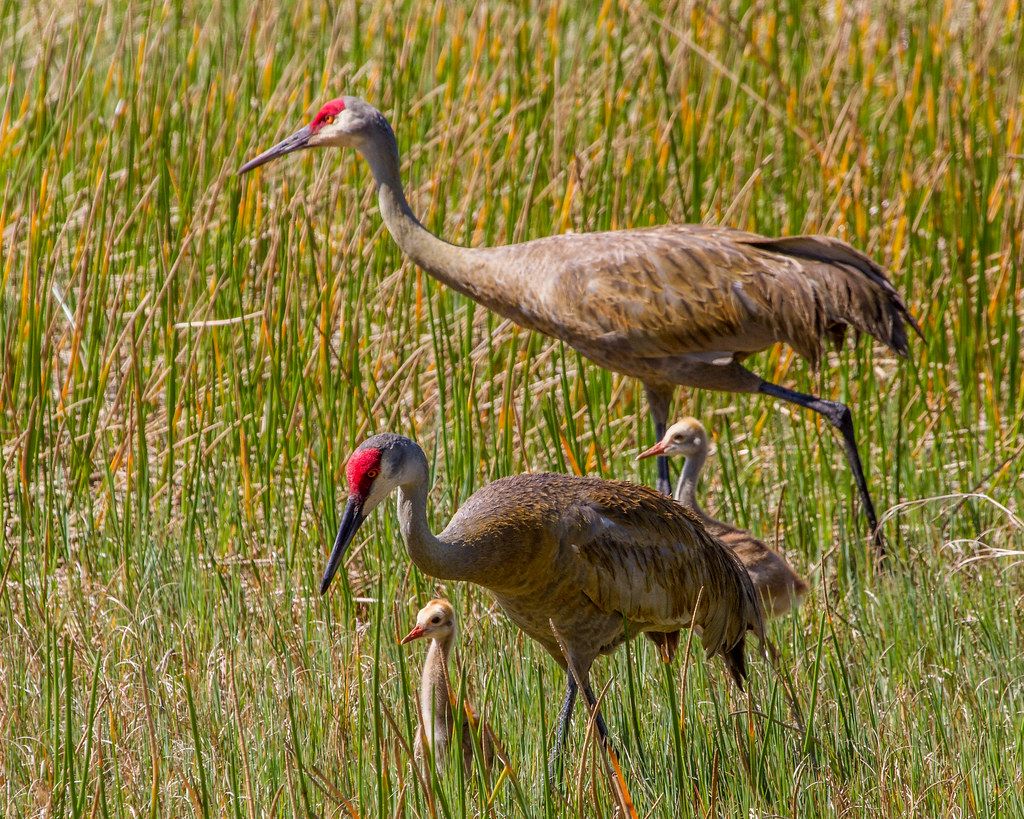
The tall grey birds walking across the lawns and verges in pairs or small family groups are sandhill cranes. With their red foreheads and loud rattling calls they are hard to miss. Florida has its own population that stays all year, joined by migrants in winter, and they are often completely unbothered by people. They can be pushy, though, and a crane that has learned to beg can peck at windows and car mirrors.
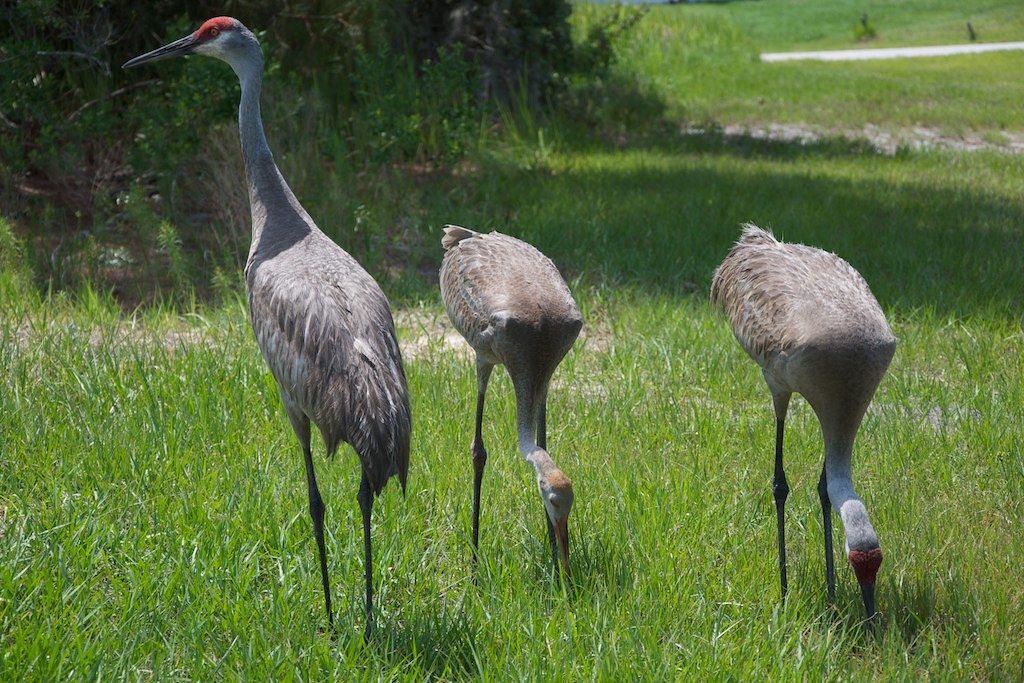
Do not feed them. It is against Florida law, and it teaches the birds to come to roads, where many are hit by cars. Keep a respectful distance, especially in spring, when the fluffy brown chicks are following their parents.
The white birds probing the grass with long curved bills are white ibis, often in busy groups. Herons and egrets stalk the pond edges, and you may see an osprey or a bald eagle over the lakes. A pair of binoculars and a simple bird guide make the lanai a fine place to start a list. For a bigger show, the wading birds at Circle B Bar Reserve near Lakeland are a short drive away.
Tortoises, armadillos and night visitors
On sandy ground, especially near undeveloped land, you may find a gopher tortoise or its burrow, a low, half-moon opening in the sand with a fan of dug earth in front. Gopher tortoises are protected in Florida, and so are their burrows, which give shelter to many other animals. Watch them from a distance, never pick one up or put one in the pool, and keep children and dogs away from burrows.
Armadillos come out in the evening and at night, rooting in lawns and flower beds for grubs, and leave small holes behind them. Raccoons check rubbish bins, so keep the lids firmly closed. Frogs and toads gather by the pool lights after rain. Watch for large toads around the house if you travel with a dog: cane toads, which are toxic to pets, have spread into parts of Central Florida.
 Another dayThe Disney Wilderness Preserve
Alligators and the pond out back
Many villa communities are built around retention ponds, which catch rainwater from roofs and roads. They look like ornamental lakes, and to an alligator they are simply water. Any pond, canal or lake in Central Florida can hold an alligator, even if you have not seen one.
Alligators are normally shy and keep away from people. Problems come when they lose that fear, usually because someone has been feeding them. A few plain rules carry most of the weight here.
- Never feed an alligator. It is illegal in Florida, and it makes the animal dangerous.
- Never approach one, on land or in the water, however still it seems.
- Keep children and pets well back from the edge of any pond or lake, especially at dusk and after dark, when alligators are most active.
- Never let a dog drink from or swim in a pond or lake.
- Do not swim in ponds or lakes outside designated swimming areas.
If an alligator seems to be a threat, comes into the pool enclosure or will not leave the yard, do not try to move it. Go inside, and report it to the state wildlife agency's nuisance alligator line or to whoever manages the house. In an emergency, call the emergency services.
Any pond, canal or lake in Central Florida can hold an alligator, even if you have not seen one.
Seen from a safe distance in a park or reserve, alligators are among the great sights of a Florida trip. Places such as Lake Kissimmee State Park let you watch them in the wild.
Snakes, fire ants and mosquitoes
Most snakes you might see around a villa, such as the fast black racer, are harmless and avoid people. Florida does have venomous snakes, including rattlesnakes, the coral snake and the cottonmouth, which lives near water. The safe rule is to leave every snake alone. Do not try to identify it at close range, and do not try to kill or catch it. Wear closed shoes when walking through long grass or at night, and look before reaching into shrubs or woodpiles.
Fire ants are the creature most likely to hurt you. They build low, loose mounds of soil in lawns and verges, and swarm out when disturbed, leaving painful stings that turn into itchy blisters. Teach children to recognise the mounds and never stand on them. Wash stings with soap and water, and seek medical help if someone has a strong reaction or swelling spreads.
Mosquitoes are worst at dawn and dusk and after rain, especially near ponds. Keep the screen doors closed, use insect repellent outdoors in the evening, and empty any containers that collect standing water around the house. Summer brings more of them than winter, as the guide to storms and heat explains.
Watching without worry
Most of the wildlife around a Florida villa adds to the holiday. A child who spends an afternoon counting anoles or watching cranes cross the lawn is learning more than any attraction could teach. Keep a list on the fridge, share the binoculars, and keep the few rules in mind: no feeding, no touching, and nobody near the water's edge. The guide to pool safety covers keeping the pool area secure for both people and visiting animals.