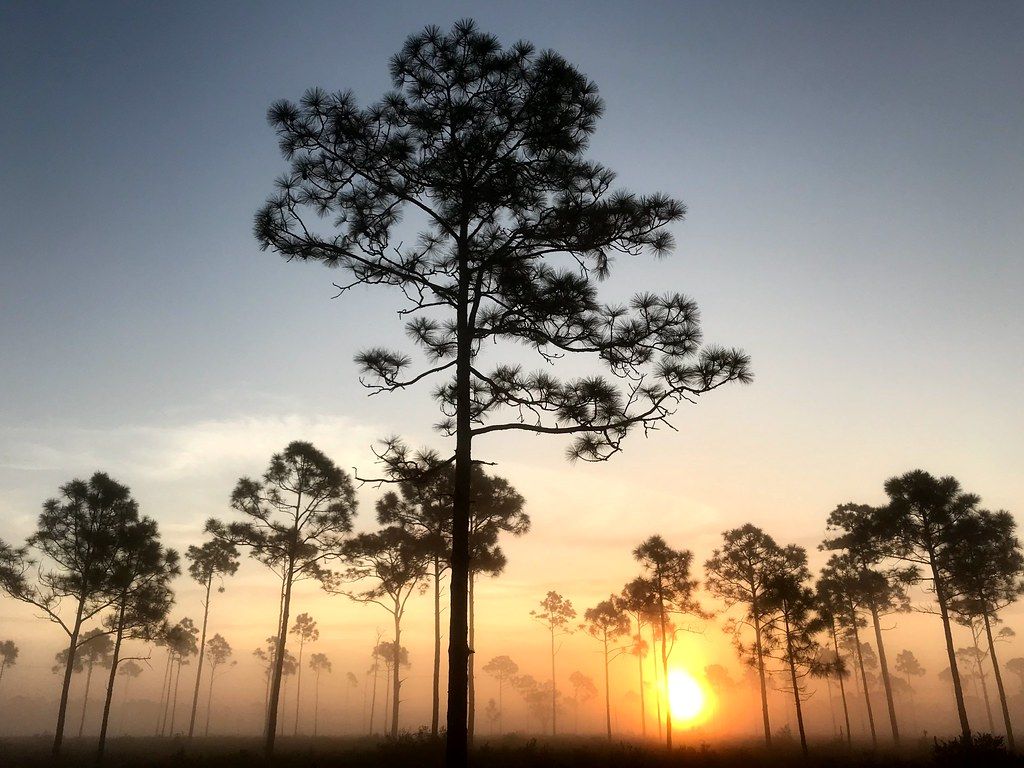
South of Kissimmee and close to Poinciana, the Disney Wilderness Preserve is a large stretch of conservation land of pine flatwoods, cypress domes, marsh and lake shore. Despite the name, it has nothing to do with theme parks. It was set aside in the early 1990s as part of a wetland mitigation agreement linked to development elsewhere, and it is owned and managed by The Nature Conservancy. Former ranch and timber land has been slowly restored to something close to the natural Florida landscape, and today it is one of the quietest places to walk within easy reach of the villa belt.
Longleaf pine and flatwoods
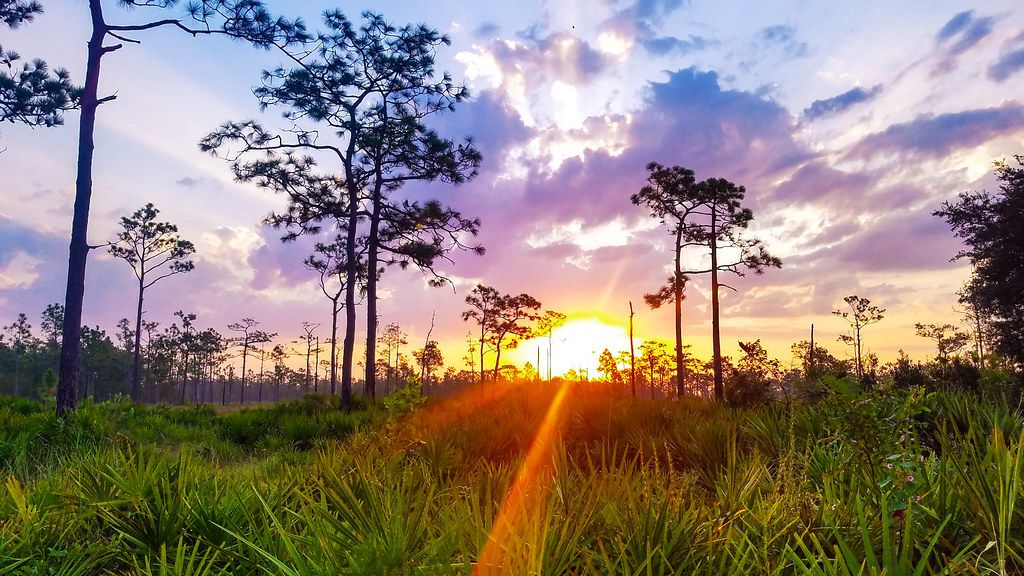
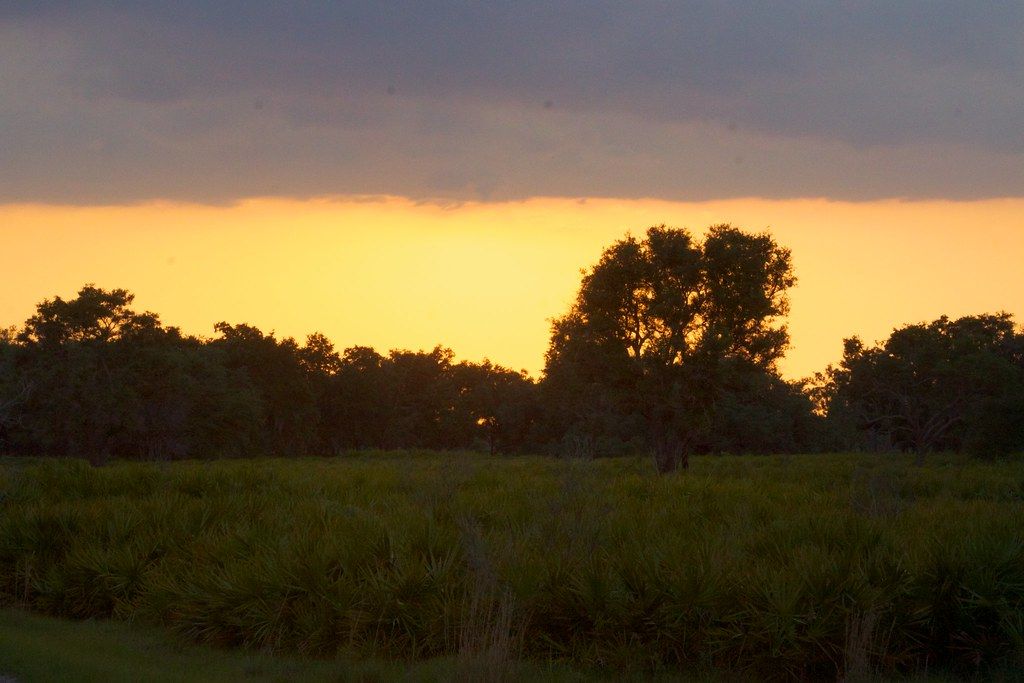
Much of the preserve is pine flatwoods: open woodland of tall pines over a low carpet of saw palmetto, wiregrass and wildflowers. Longleaf pine, once the dominant tree across much of the south-east, is the star here. Its long needles grow in bunches at the ends of the branches, and young trees pass through a grass stage, when they look like a tuft of needles on the ground.
Scattered through the flatwoods are cypress domes, small rounded stands of cypress growing in shallow, wet depressions, and wide marshes that fill in the rainy season. The preserve sits at the top of the Kissimmee basin, part of the headwaters that eventually feed the Everglades. The guide to paddling Shingle Creek covers another headwater stream not far away.
The trails and Lake Russell
From the visitor area, marked trails lead out through the flatwoods. There is usually a short interpretive loop suitable for families and a longer route out to the shore of Lake Russell. Lake Russell is one of the few lakes in Central Florida with no houses on its shore, and the view across it is one of the most natural you can find in the region.
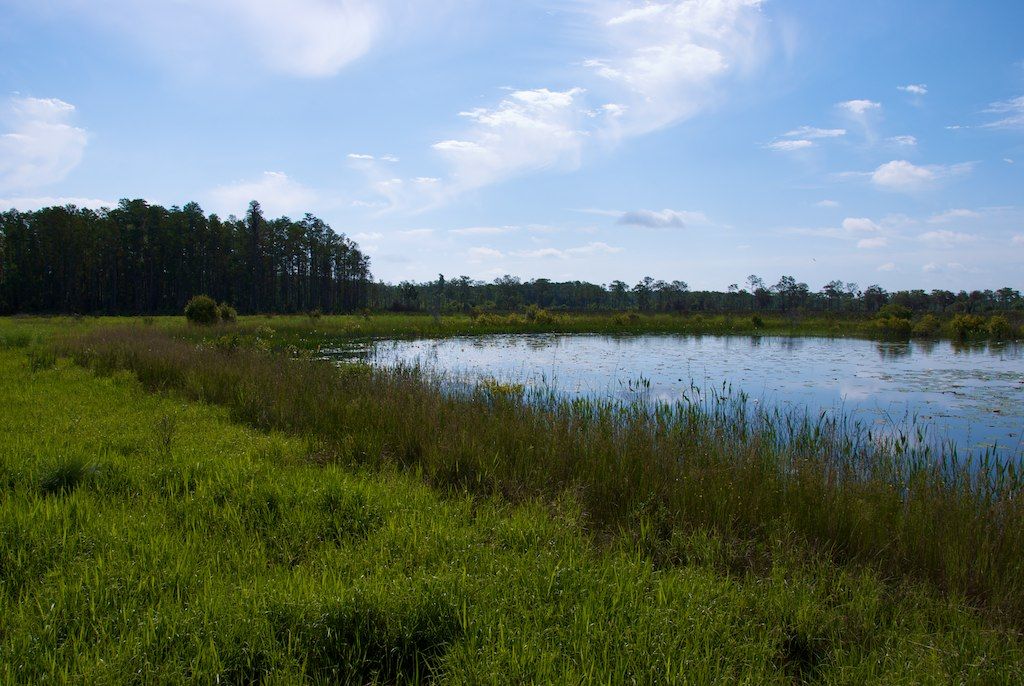
The trails are mostly flat and sandy, with little shade in places. Some sections can be wet or flooded after summer rains. Trail routes and lengths change with burns, restoration work and the seasons, so pick up a map on arrival.
The preserve keeps limited opening days and hours; arrive early in the day.
 Another dayLake Kissimmee State Park
Controlled burns
Fire is part of the life of a Florida flatwood. Before people stopped it, lightning set regular, low fires that cleared the undergrowth and kept the pines open. Without fire, the forest grows dense and shrubby, and the plants and animals that depend on open pinelands disappear.
The preserve uses prescribed burns to restore that pattern. Crews burn sections under careful conditions, and you may see blackened ground and scorched trunks along the trail. Within weeks the palmetto and grasses are green again, and wildflowers often bloom more strongly in the burned areas. Trails can close during and after a burn.
The same approach is used across much of central Florida's conservation land, including the scrub along the Lake Wales Ridge.
Red-cockaded woodpeckers
The preserve is home to one of Florida's rarest birds, the red-cockaded woodpecker. Unlike other woodpeckers, it digs its nest cavities in living pines, usually old ones softened by heart rot, a process that can take years. It needs large, mature, open pine forest, and it declined sharply as that forest was cleared. Birds have been brought to the preserve as part of a recovery effort.
The woodpeckers live in family groups, and their cavity trees are often marked with a painted band so that crews can protect them during burns. The birds are small, black and white, with a striped back; the red streak that gives them their name is rarely visible. Morning is the best time to see them.
Other wildlife includes bald eagles, sandhill cranes, gopher tortoises, deer and, at the wetlands, herons and alligators. The guide to who else lives at the villa covers the alligator rules, which apply here too.
A calm morning outing
The preserve is a calm outing, suited to walkers and early risers rather than to a group looking for activities. There are no shops or food for sale, so bring water and snacks. Facilities near the entrance are basic.
- Arrive early, when it is cool and the birds are active.
- Wear closed shoes, a hat and insect repellent.
- Bring binoculars for woodpeckers, eagles and cranes.
The cooler months, from November to April, are the best time to walk. In summer, keep to the morning and leave before the afternoon storms build.
Keep the group small and the pace slow. This is not a place for a big, noisy party; the birds and tortoises are easily disturbed, and the pleasure of the walk is in the silence. Teenagers who like photography often enjoy it more than expected, and a grandparent who walks well can manage the shorter loop comfortably. Stay on the marked trails, take all litter home, and leave plants, cones and feathers where you find them.
Why it matters
From the villa belt, Central Florida can feel like one long run of roads and houses. The preserve is a reminder of what most of the land looked like before: open pine woods, wet prairies and quiet lakes, shaped by fire and water. A morning here, followed by an afternoon at the pool, makes a good balance in a busy week.